
Scientists Find "Gemstones" in the Atmosphere of a Marshmallow-Like Planet
The James Webb Space Telescope helped map WASP-17b, a hot planet about 1,300 light-years away.
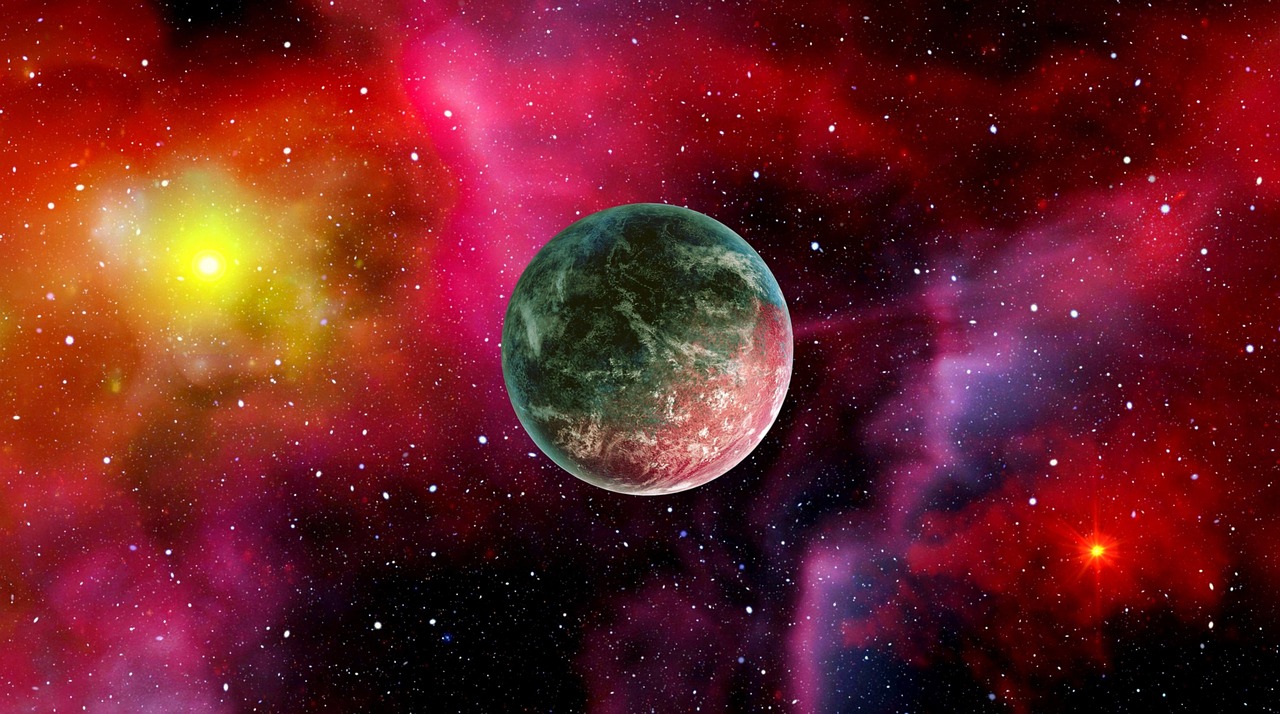
Astronomers using the James Webb Space Telescope have learned new things about a strange, extremely hot world that is as fluffy as a marshmallow. The planet is WASP-17b, about 1,300 light-years away. Space.com reports that it has about 0.8 times the mass of Jupiter but is about twice as wide, so it is a "super-puff" planet. It is so close to its star that it goes around it in less than four Earth days, and that makes it a "hot Jupiter," a very hot gas giant.
A team used a new technique called transmission strings to map the shape of its atmosphere. They found that the atmosphere looks like a ring with bright "gems" rising from it. The planet is tidally locked, which means the same side always faces its star, so its dayside is hit by constant radiation, while its cooler nightside faces space. The 3D views showed that the chemistry and temperature of the atmosphere change from dayside to nightside, which matches theory and models.
The technique works because it follows the planet as it passes in front of its star, and it records the light around the edge of the planet's atmosphere from different angles. Older methods only map the light as an average around the whole edge. Lili Alderson of Cornell University explained that instead of assuming the atmosphere is a circle of the same size all the way around, the technique lets scientists measure different distances from the center to the edge. She said they went from a ring to knowing where on the ring the gemstones are.
One "gem" shows up where hot winds from the planet reach the equator and the nightside, and the cooler side's atmosphere puffs up. Alderson said theory predicts a strong temperature difference between the morning and evening sides, and WASP-17b fits that trend nearly exactly.
Hannah Wakeford of the University of Bristol said planets are temperamental and their atmospheres are complex and chaotic, so she was excited that the numbers came together into such a clear picture of a giant world more than 1,000 light-years away. Space.com says the method is a step forward for modeling the atmospheres of the more than 6,000 worlds in NASA's exoplanet catalog.
More in Science
Ancient Japanese Populations Changed Differently After a Huge Volcanic Eruption
A new study led by Lund University finds that people in prehistoric Japan were affected in different ways after a volcano erupted about 7,300 years ago.

Mantis Shrimp Eyes Contain Pigments That Switch Back and Forth Like Light Switches
Scientists found that some of the animal's vision pigments see red light that few animals can detect.

A Study of 38,467 Songs Finds Lyrics Have Become Less Emotional
Michigan State University researchers looked at songs from 230 artists between 1947 and 2024.